Beyond Dot-on-a-Map: The Autonomous Building Future
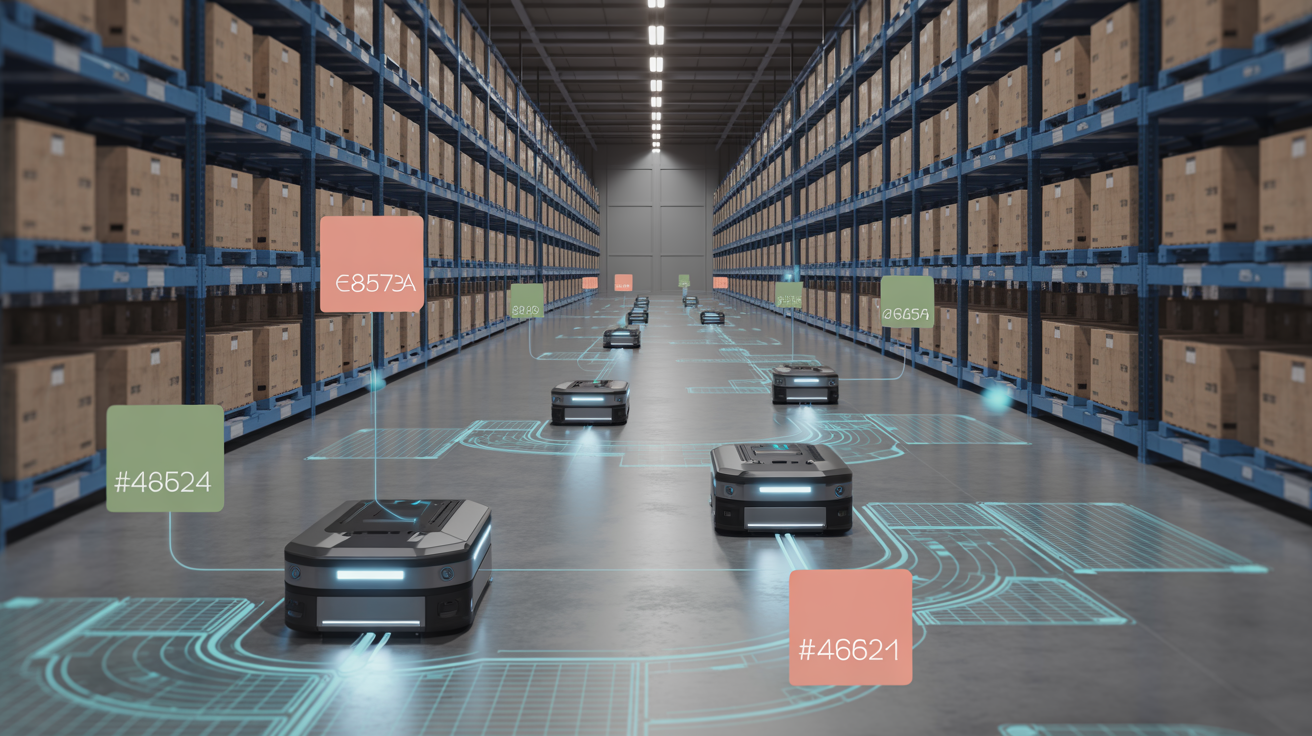
Most people think of indoor positioning as a blue dot on a mall map helping shoppers find the food court. That era is ending. The 2026–2027 wave of building technology is about autonomous systems — robots, AI agents, and automated vehicles that need to understand, navigate, and operate within physical indoor environments without human guidance.
The challenge: GPS doesn't work indoors. And the crude "you are here" maps that suffice for human wayfinding are useless for autonomous machines that need centimetre-level precision, semantic understanding of spaces, and real-time obstacle awareness.
Mapxus's IMDF-Native Spatial Graphs
This is where Mapxus's technology becomes critical infrastructure. Their core data output uses IMDF-Native (Indoor Map Data Format) and unified indoor-outdoor spatial graphs that transform raw, static floor plans into highly structured, machine-consumable data layers.
Think of it as the difference between a paper map and Google Maps — but for the indoor world. Mapxus's spatial graphs encode:
- Topological Relationships: Which rooms connect to which corridors, which floors connect via which lifts
- Semantic Labels: Not just "room 405" but "fire escape route," "restricted area," "emergency assembly point"
- Navigability Constraints: Door widths, ramp gradients, weight limits for autonomous vehicles
- Real-Time State: Which paths are blocked, which doors are locked, which areas are under maintenance
The Compliance Connection: Why Autonomous Maps Need Legal Intelligence
As buildings become populated with autonomous delivery robots, cleaning machines, and security drones, the compliance landscape becomes exponentially more complex. Every autonomous system operating in a building creates new liability vectors:
- Robot collision with a building occupant: Who is liable? What evidence exists?
- Autonomous fire patrol missing a hazard: Does the building's compliance record cover this scenario?
- Delivery drone accessing a restricted zone: Was the spatial restriction properly encoded and enforced?
Mapxus.AI uses Mapxus's spatial intelligence layer to extend compliance monitoring into this autonomous future — ensuring that every robot path, every automated inspection, and every autonomous decision is logged, tracked, and legally defensible.
Enterprise B2B Revenue: The Scale of Opportunity
As AI agents, automated factory drones, and hospitality robots roll out globally, the market for indoor spatial data is exploding. Mapxus is effectively building the infrastructure-level "brain maps" these autonomous systems require. For Mapxus.AI, this opens massive enterprise B2B SaaS licensing revenue streams in logistics, heavy industry, and security — with compliance as the binding legal layer that makes autonomous building operations insurable and defensible.